Postgraduate Studies in Neuro-Linguistic Programming and Mindfulness
Scientific Area
Stress in Daily Life
The exposure of the general population to stressors has reached epidemic proportions today. Over the past 40 years, a vast number of approaches to this problem have emerged, emphasizing self-sustaining proposals, which often advantageously replace more classic long-term approaches. This is the case with some solutions that, in classical psychology, fall, for example, within the scope of cognitive-behavioral therapies.
Verbal and Nonverbal Communication
Communication is what makes the world go round, but few people know exactly how it works. Communication is something natural and everyday, but most people only have a vague notion of the rules that govern it. And it is our only tool to achieve the results we want.
That is why it is so important to know the rules that govern communication: how I communicate and how I perceive the way others communicate with me. It therefore becomes fundamental to know some of the theories and models of communication, to evaluate their relevance and, above all, to become able to apply them in practice.
By raising communication to higher levels of objectivity and empathy, we ensure better achievement of objectives, greater and better levels of collaboration between people and teams, thus contributing to higher degrees of individual and collective satisfaction and well-being.
Focus as a Differentiating Element
Why do people with the same intellectual and cognitive level, and the same potential, produce such different results in their lives? The answer is very simple: truly entrepreneurial people are rarely distracted. They are able to build and maintain their focus on what is truly important, disregarding what is incidental or less important. They are people with far greater skills to lead, produce, or make things happen, and with much higher quality than their peers or competitors!
NLP is currently widespread in various fields, from healthcare to business, having undergone multiple developments that have led it to be taught worldwide and studied as a university discipline (for example, at Bangor University in the United Kingdom or at the University of Santa Cruz in California).
This postgraduate course aims to teach students the bio-neuro-psychological foundations that allow them to understand the mental processes underlying Mindfulness and Neuro-Linguistic Programming; and it aims to equip students with the tools to use these two techniques in both their personal and professional lives. The uniqueness of this course lies in the association of these two areas of knowledge, which have experienced such tremendous development in recent years.
International Certification as a “Practitioner” in NLP and Postgraduate Certificate in NLP and Mindfulness
With several editions already completed in a university context (ESTeSL and UAL), this Postgraduate course has been successful in its main objective of developing students’ skills in two areas:
- Personal aspect, allowing the activation of strategies and tools for emotional management, relational management, improvement of internal and external communication processes, creating, developing and maintaining focus and stress management;
- The PROFESSIONAL aspect, enabling the optimization of interaction with other people and teams, and a better response to stressful situations, leading to increased performance effectiveness and professional fulfillment, as well as a reduction in adverse events associated with inefficient communication.
These objectives will be achieved based on Mindfulness techniques and learning Neuro-Linguistic Programming at the third generation level (based on the structure of neurological levels, it works not only on skills, beliefs and values, but also on the deeper levels of identity and mission).
- Graduates from any field, with preference given to those in the health field.
- Candidates without academic degrees may be admitted, provided they have been previously evaluated through a curriculum analysis.
MODULES
Stress e Copping
- Stress and stressors: Definition, perspectives, and associated emotions.
- Occupational stress: Definition, predictors, and consequences.
- The transactional model. Stress as a process.
- Coping strategies: Definition, characteristics, and benefits.
Cleópatra Andrade
12 hurs
Neurobiology of Emotions
- Body physiology and brain structures (nervous system, endocrine system): characteristics and their relationship to emotional experiences.
- Neurons, synapses, and neural networks
- Mirror neurons
- Effects of stress on the body (cortisol)
Isadora Migliori
12 hours
Cognitive-Behavioral Psychology
- Concepts of cognition, emotion, and behavior
- The centrality of cognitive processes: The role of cognitions as mediators of human behavior.
- Beliefs and other cognitive processes
- Monitoring and changing cognitive activity
Margarida Rafael
12 hours
Mindfulness and Health
- Mindfulness: What is it? Roots; scientific evidence.
- Mind, thoughts and emotions
- The present moment: techniques that increase awareness.
- Stress, reactivity, and awareness. The role of Mindfulness (acceptance, kindness, compassion, resilience, and forgiveness) in the stress response.
- Mindfulness applications in different life contexts.
João Pereira Leite
16 hours
Neuro-Linguistic Programming
- Introduction to NLP – what it is, history and approaches
- Basic principles and assumptions
- The NLP communication model
- Neurological levels
- Goal setting
- Representation Systems and Sub-modalities
- Rapport
- Meta model of language
- Milton’s model of language and metaphors.
- Reframing
- Values and beliefs
- Parts template
- Strategy modeling
- Strategy modeling
Eugénia Fonseca
130 hours
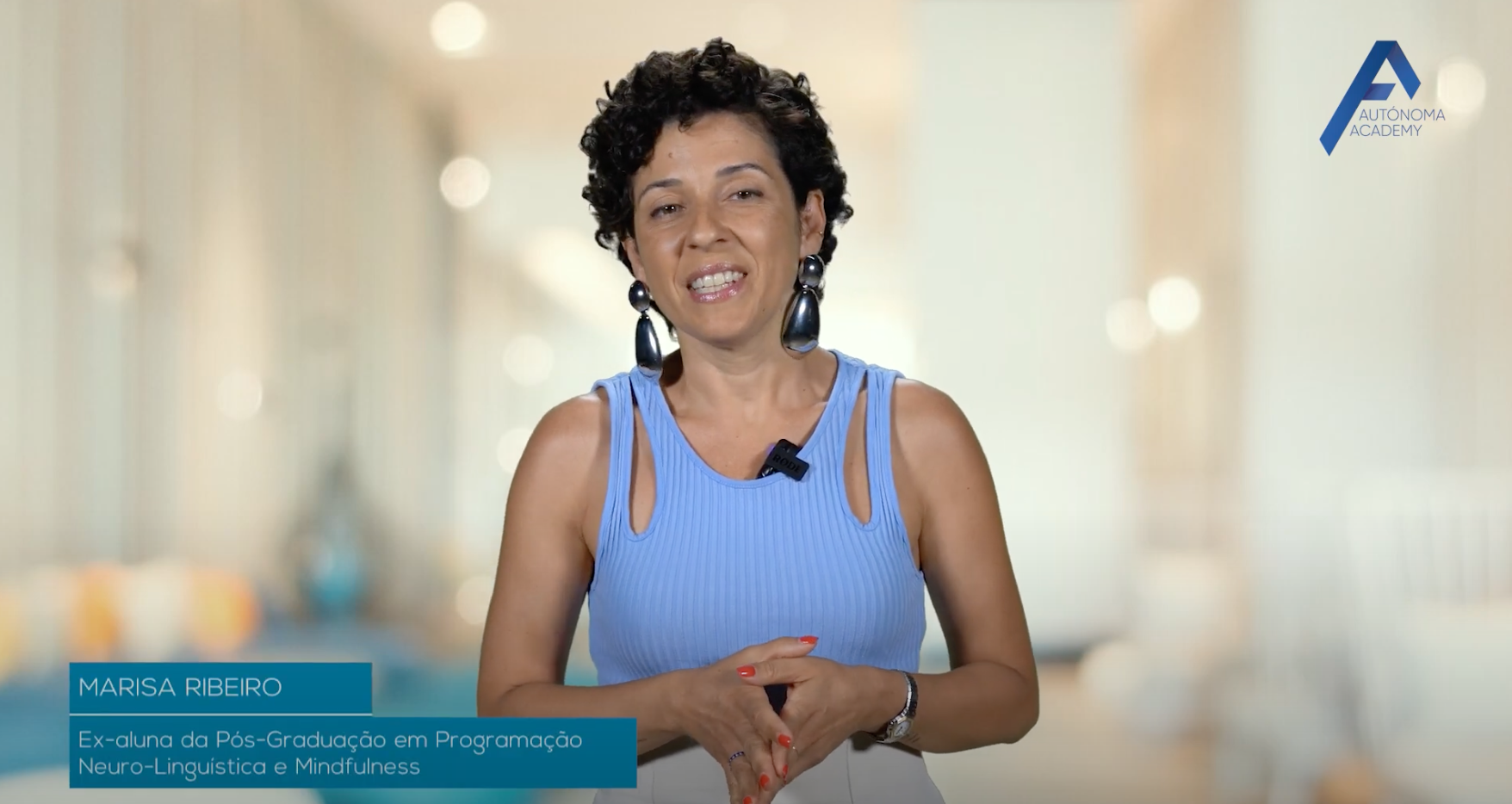
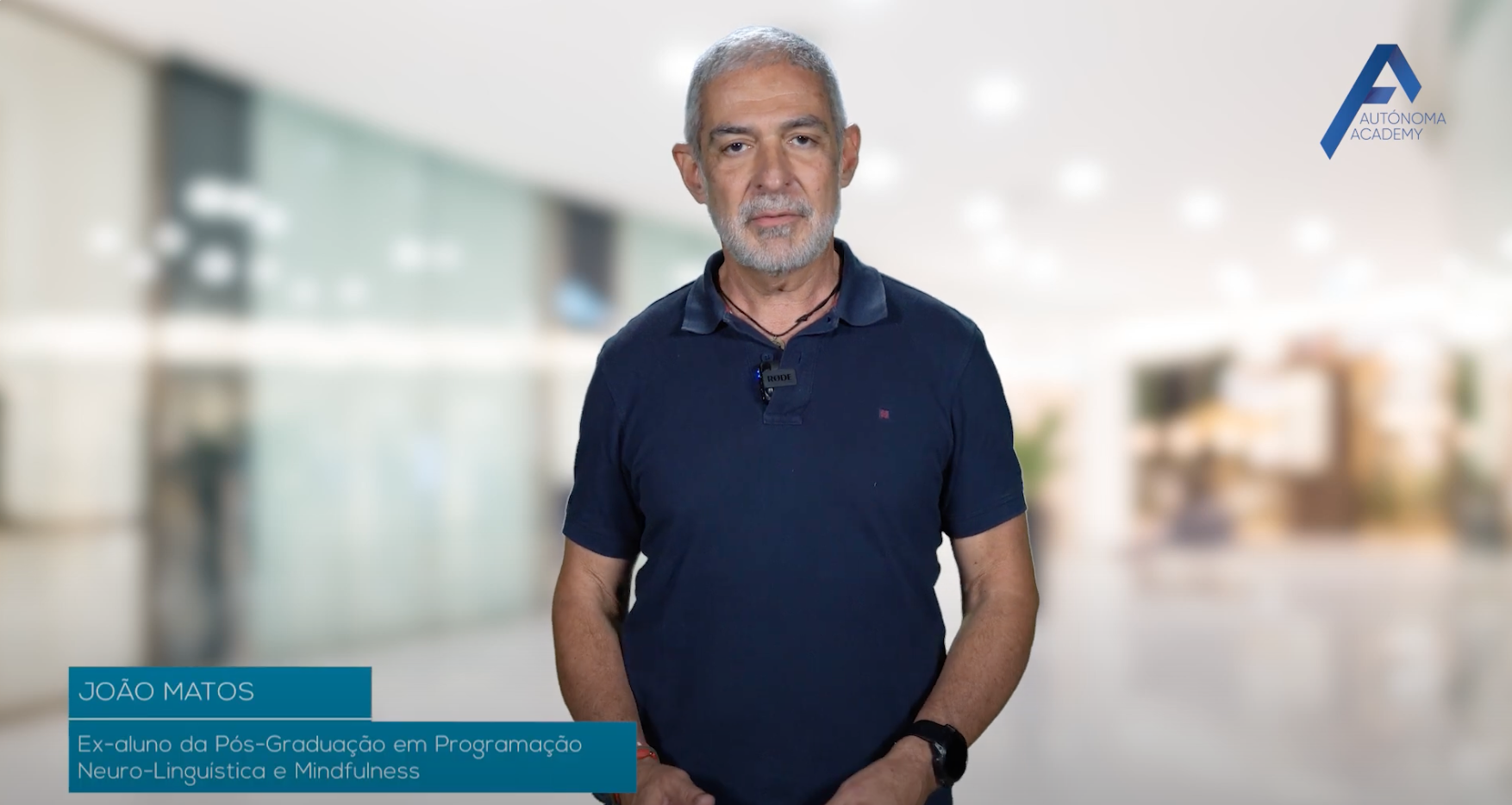
Testimonials
Next Edition: Date to be announced.
Teaching Regime: Online and In-Person
Duration: 182 hours
ECTS: –
Time: Fridays from 6:00 PM to 10:00 PM and Saturdays from 9:00 AM to 7:00 PM (two weekends each month)
- Registration fee: €150
- Registration fee: R$ 100
- School insurance: €20
- Certificate of qualifications: €75 (optional)
- Fee: €1,850*
Payment can be made in 5 monthly installments or in full with a 3.5% discount.
Former students of Autónoma receive a 10% discount on their monthly tuition fees.
- Original or certified copy of the Qualifications Certificate (a)
- Color photograph
- Curriculum vitae.
(a) Qualifications obtained at the Autonomous University do not require authentication. In the case of qualifications obtained abroad, in addition to the authentication of the copy(ies) described above, authentication by the Portuguese Embassy or Consulate in the country of origin of the academic qualification or by the Apostille of the Hague Convention is required. If the documents are not in Portuguese, translation of the documents by a translator recognized by the Portuguese diplomatic representation will be required.
Registration will only be validated upon payment of the fee and delivery (within a maximum of 30 days) of all requested documentation.
Failure to submit the aforementioned documents invalidates the registration and prevents attendance at the course.